China Top 10 Green Energy Suppliers for Global Buyers?

Global buyers are rethinking how electricity is sourced, priced, and verified. This guide examines China’s top 10 Green Energy suppliers and their relevance across solar, wind, storage, and integrated power projects. The focus is practical: product quality, manufacturing capacity, export experience, service coverage, financing support, and documented environmental performance.

Fatih Birol, Executive Director of the International Energy Agency, has said, “The world is entering an age of electricity.” His observation reflects a visible shift. Warehouses now display rows of photovoltaic modules, battery containers, and smart inverters. Yet impressive factories do not guarantee dependable delivery. Buyers must also assess warranties, testing standards, supply-chain transparency, spare-parts access, and local technical support.

This overview is designed for developers, distributors, utilities, and commercial users comparing Chinese suppliers in international markets. It considers how each company approaches reliability, efficiency, grid compatibility, and long-term cooperation. Some suppliers may lead in scale, while others provide stronger customization or after-sales service. That difference matters.

No ranking can fit every project. A utility-scale solar farm has different needs from a factory rooftop or an island microgrid. Pricing can also change quickly. Shipping conditions, currency movements, policy changes, and certification requirements deserve careful review. The list offers a useful starting point, not a final procurement decision. Even experienced buyers can overlook small details, such as connector compatibility or response times during a maintenance emergency.
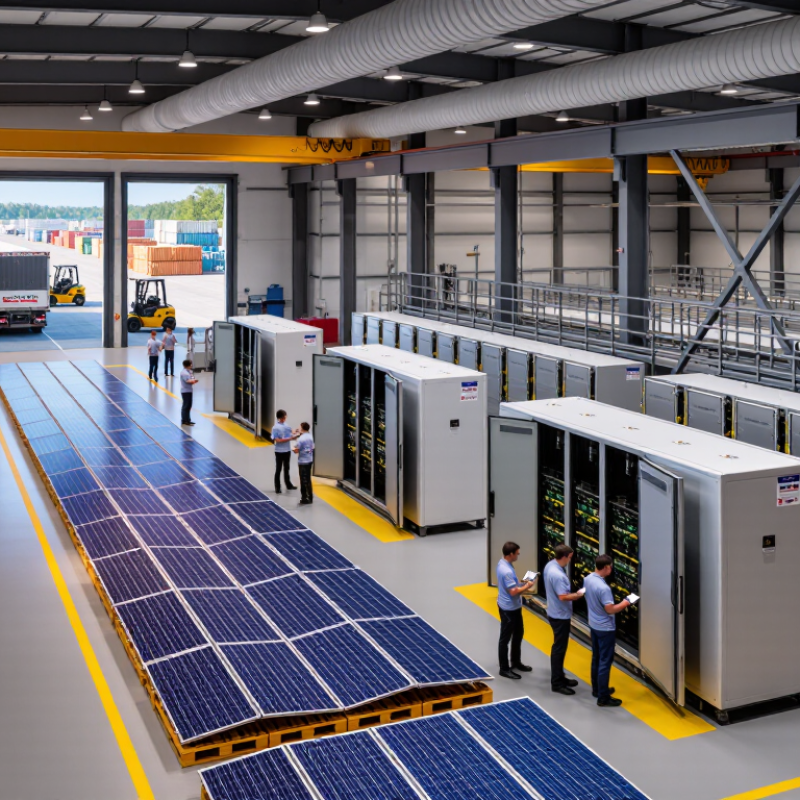
China Top 10 Green Energy Suppliers for Global Buyers?

What Defines a Leading Green Energy Supplier in China?

What Defines a Leading Green Energy Supplier in China?

A leading green energy supplier is not defined by low prices alone. It combines verified technology, stable production, and transparent project evidence. IRENA’s Renewable Capacity Statistics 2024 reported that China added about 297.6 gigawatts of renewable capacity in 2023. This scale shows manufacturing strength, but capacity figures do not automatically prove supplier quality.

Global buyers should examine test reports, product warranties, factory audits, and component traceability. A reliable supplier can explain where materials come from and how performance is measured. The IEA Renewables 2024 report expects China to account for nearly 60% of global renewable capacity growth through 2030. That forecast increases the need for suppliers with realistic delivery schedules, skilled technical teams, and strong after-sales service.

Look beyond the brochure.

Leading suppliers also understand local regulations, grid requirements, carbon accounting, and responsible sourcing standards. Independent certifications and third-party testing improve confidence, especially for overseas projects. Yet no supplier is flawless. Some published efficiency results may reflect ideal laboratory conditions, not dusty rooftops or humid coastal sites. Buyers should request field data from similar climates and review failure rates over time. A careful supplier admits limitations, updates documentation, and supports corrective action instead of promising perfection.

How the Top 10 Suppliers Are Selected and Compared

Selecting China’s top 10 green energy suppliers requires more than comparing factory size. A reliable review combines audited production capacity, product efficiency, certification, delivery records, and after-sales support. The IEA reported that global renewable capacity additions reached nearly 510 GW in 2023, with China providing a major share. This scale matters, but volume alone proves little.

The comparison should use consistent evidence. For solar suppliers, reviewers can examine module degradation rates, warranty terms, testing records, and annual production output. For wind and storage suppliers, they should check operating hours, safety performance, grid compatibility, and spare-parts availability. IRENA’s Renewable Capacity Statistics 2024 recorded China as the largest contributor to new renewable capacity. Still, shipment data may hide project delays, weak service networks, or unclear lifecycle costs. That is where many rankings become imperfect.

Tips: Ask for third-party test reports and recent delivery references. Check whether certifications match the destination market. Compare total ownership cost, not only the quoted unit price. Carbon reporting also deserves attention. The Global Wind Energy Council notes that supply-chain resilience remains a major industry concern. Buyers should therefore assess raw-material transparency, production continuity, and recycling plans. A supplier with slightly lower efficiency may perform better when maintenance response is faster. This judgment needs evidence, not attractive brochures.

Profiles of China’s Top 10 Green Energy Suppliers

China’s green energy supply chain includes manufacturers, engineering firms, and service providers. The following profiles highlight ten supplier types that global buyers commonly assess through factory visits, project records, and third-party audits.

1. Solar module manufacturers offer high-volume photovoltaic panels for utility and commercial rooftops. Buyers should review degradation data, not only efficiency claims.

2. Solar cell specialists focus on conversion performance and process consistency. Independent testing remains important.

3. Inverter producers supply equipment that manages power conversion and grid connection. Warranty response can differ greatly between regions.

4. Battery system suppliers provide containerized storage for factories, ports, and renewable projects. Thermal management deserves close inspection.

5. Wind turbine manufacturers develop onshore equipment for varied terrain. Service access may determine long-term value.

6. Small wind equipment suppliers serve farms, islands, and remote facilities. Output estimates need local wind measurements.

7. Hydropower equipment makers provide turbines, generators, and control systems for existing waterways. Environmental assessments must guide project design.

8. Biomass energy suppliers build systems using agricultural residues and organic waste. Feedstock quality can change seasonally.

9. Green hydrogen equipment suppliers manufacture electrolyzers and related balance-of-system components. Their commercial experience is still uneven.

10. Energy-efficiency solution providers integrate heat pumps, smart controls, and industrial monitoring. Savings depend on operating behavior.

Experienced sourcing teams compare production capacity, quality controls, spare-parts planning, and export documentation. They also verify whether published performance figures match field conditions. A polished brochure proves little. Details matter. Some suppliers present strong factory systems but limited overseas service networks, while others have reliable project experience but slower customization. Buyers should request reference sites, inspection reports, shipment records, and clear warranty terms before signing procurement agreements.

Key Products, Technologies, and Global Markets Served

China’s top ten green-energy suppliers for global buyers span solar modules, inverters, lithium batteries, wind turbines, and hydrogen equipment. Their products serve utility projects, factories, commercial buildings, and remote microgrids. China added about 297 gigawatts of renewable capacity in 2023, representing nearly two-thirds of global additions, according to IRENA’s Renewable Capacity Statistics 2024. That scale supports competitive pricing, large production capacity, and faster equipment replacement.

Technology depth varies. Leading suppliers increasingly offer n-type solar cells, high-voltage battery systems, intelligent energy management, and offshore wind platforms. Battery makers also provide containerized storage for solar and wind balancing. The IEA reported that China held more than 80% of global solar module manufacturing capacity in 2023. This figure signals strong supply availability, but not automatic quality. Buyers should verify degradation warranties, fire testing, cybersecurity controls, grid codes, and spare-parts support.

Global markets served include Southeast Asia, Europe, the Middle East, Africa, Latin America, and Australia. Export experience matters. A supplier familiar with European grid certification may not understand weak-grid conditions in Africa or extreme heat in the Middle East. This is where rankings become imperfect. Public data often measures shipments, not long-term performance. Requesting independent test reports, factory audits, project references, and clear warranty terms remains essential. A low quotation can hide integration costs. That lesson is easy to miss.

China Top 10 Green Energy Suppliers for Global Buyers? - Key Products, Technologies, and Global Markets Served

Rank Supplier Profile Primary Green-Energy Products Key Technologies Typical Buyer Segments Global Markets Served Common International Standards Main Export Strength
01 Utility-Scale Solar Manufacturer Monocrystalline silicon wafers, solar cells, bifacial photovoltaic modules N-type TOPCon, PERC, half-cut cells, multi-busbar interconnection, bifacial generation Utility developers, EPC contractors, independent power producers Europe, Southeast Asia, the Middle East, Australia, Latin America, Africa IEC 61215, IEC 61730, ISO 9001, ISO 14001 High-volume module production and large project delivery
02 Distributed Solar and Storage Integrator Rooftop PV systems, hybrid inverters, residential and commercial batteries Maximum-power-point tracking, lithium iron phosphate batteries, energy-management software Households, factories, commercial buildings, agricultural facilities Europe, North America, Oceania, South Africa, Southeast Asia IEC 62109, IEC 62477-1, IEC 62619, UN 38.3, CE requirements Integrated PV, battery, monitoring, and backup-power solutions
03 Onshore Wind Turbine Supplier Onshore wind turbines, turbine generators, blades, control systems Permanent-magnet generators, variable-speed operation, pitch control, digital condition monitoring Wind-farm developers, utilities, government-backed renewable projects Asia-Pacific, Central Asia, Latin America, Africa, selected European markets IEC 61400 series, ISO 9001, ISO 14001, occupational safety standards Competitive turbine engineering for medium- and large-scale projects
04 Grid-Scale Battery Energy Storage Supplier Containerized battery systems, battery racks, power-conversion systems Lithium iron phosphate chemistry, battery-management systems, liquid cooling, remote monitoring Utilities, renewable developers, microgrid operators, industrial users Europe, North America, Australia, the Middle East, Southeast Asia IEC 62933, IEC 62619, UL 9540, UL 9540A, UN 38.3 Peak shaving, frequency regulation, renewable-energy time shifting
05 Electric-Vehicle Battery Manufacturer EV battery cells, modules, packs, commercial-vehicle energy-storage systems LFP and nickel-manganese-cobalt chemistries, cell-to-pack design, fast charging, thermal management Automotive OEMs, electric-bus manufacturers, fleet operators Europe, Southeast Asia, Latin America, the Middle East, selected North American markets ISO 26262, UN 38.3, IEC 62660, IATF 16949, applicable regional regulations High-volume battery manufacturing and automotive-grade quality systems
06 Solar Inverter and Power-Electronics Supplier String inverters, central inverters, hybrid inverters, monitoring platforms Wide-voltage MPPT, grid-support functions, reactive-power control, cloud-based diagnostics Solar EPC firms, installers, utilities, commercial energy users Europe, Asia-Pacific, Latin America, Africa, the Middle East IEC 62109, IEC 61727, IEC 62116, EN 50549, applicable grid codes Broad product range for residential, commercial, and utility applications
07 Green Hydrogen Equipment Supplier Alkaline electrolyzers, PEM electrolyzers, hydrogen purification and compression equipment Water electrolysis, renewable-power coupling, automated gas separation, plant-level control systems Refineries, chemical producers, steelmakers, transport-fuel projects China, the Middle East, Central Asia, Europe, Australia, Africa ISO 22734, IEC 62282, ISO 14687, ISO 9001, pressure-equipment requirements Large-scale alkaline systems and renewable-hydrogen project integration
08 Biomass and Waste-to-Energy Equipment Supplier Biomass boilers, waste-incineration systems, steam turbines, flue-gas treatment equipment Combustion optimization, combined heat and power, emissions control, heat recovery Municipalities, industrial parks, agricultural processors, district-heating operators Southeast Asia, Africa, the Middle East, Eastern Europe, Latin America European emission requirements, ISO 9001, ISO 14001, local environmental permits Turnkey thermal-energy systems using local biomass and waste resources
09 Geothermal and Heat-Pump Equipment Supplier Air-source heat pumps, ground-source heat pumps, hot-water systems, thermal-storage units Variable-frequency compressors, low-ambient heating, inverter control, natural-refrigerant options Residential developers, hotels, commercial buildings, industrial heating users Europe, Central Asia, the Middle East, Southeast Asia, North Africa EN 14511, EN 14825, ISO 13256, CE requirements, regional refrigerant rules Energy-efficient heating and cooling for buildings and industrial facilities
10 Renewable-Energy EPC and Microgrid Provider Solar-plus-storage microgrids, hybrid renewable systems, energy-management platforms Microgrid controllers, diesel replacement, demand response, remote asset monitoring Industrial sites, islands, mining operations, rural electrification programs Africa, island nations, Southeast Asia, Latin America, the Middle East IEC 60364, IEC 62477-1, ISO 9001, ISO 14001, local electrical codes End-to-end engineering, procurement, construction, and commissioning
Note: The profiles are anonymized supplier categories based on established Chinese green-energy manufacturing and export segments. Actual product configurations, certifications, market eligibility, warranty terms, and project references should be verified directly before procurement.

What Global Buyers Should Check Before Choosing a Supplier

When comparing China’s top ten green energy suppliers, global buyers should look beyond price and production capacity. A polished website proves little. Request recent factory photos, production records, and product samples with matching serial numbers. Verify whether certificates cover the exact model, not merely the product category. Independent laboratory reports can expose differences in efficiency, safety, and durability.

Ask for a clear bill of materials and component origins. Traceable supply chains reduce shipment surprises and quality disputes. Check annual output against factory space, staffing, and equipment. An unusually large claim deserves careful testing. Arrange a video inspection or an on-site audit, preferably through an independent assessor. Review previous export experience, packaging methods, loading procedures, and failure rates. Small details matter, such as moisture protection inside an inverter carton.

Contract terms need equal attention. Define acceptable performance ranges, inspection rights, spare-part availability, warranty response times, and remedies for delays. Confirm whether technical support operates in your time zone and language. Calculate total cost, including certification, shipping, installation, maintenance, and recycling obligations. The cheapest quotation may become expensive after one damaged shipment. Buyers should also examine labor practices, environmental records, data protection, and compliance with destination-country regulations.

Be cautious with perfect promises. Real projects encounter delays, redesigns, and occasional defects. A reliable supplier explains these risks and documents corrective actions. My own review process would include a pilot order before a large commitment, although this can increase short-term cost. That compromise is sometimes worthwhile. Perform the checks in writing. Verbal confidence is not evidence.

China Green Energy Supply Base: Renewable Capacity by Technology

Installed capacity indicates the scale of China’s renewable-energy supply ecosystem, but it should not be treated as a supplier-quality ranking. Global buyers should also verify product certification, factory audits, warranty terms, lifecycle emissions, traceability, delivery capability, and after-sales support before selecting a supplier.

Source: International Renewable Energy Agency (IRENA), Renewable Capacity Statistics 2025. Figures are rounded and represent capacity installed at the end of 2024.