Ultimate Guide to Choosing the Best EV Charger Wall Plug?
Choosing the right Ev Charger Wall Plug can be daunting. With numerous options available, it’s crucial to find the best fit for your electric vehicle needs. Renowned industry expert, John Smith, states, “A proper EV Charger Wall Plug enhances efficiency and convenience." His insights highlight the importance of understanding your requirements.
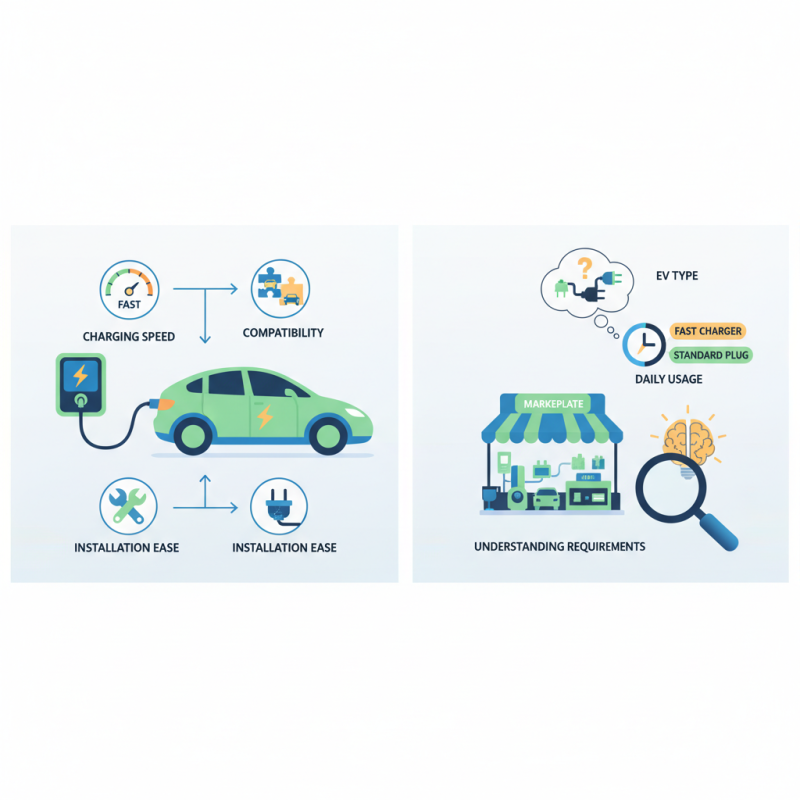
Many factors come into play when selecting an EV Charger Wall Plug. Think about charging speed, compatibility, and installation ease. Consider the type of EV you own. Each vehicle may require a different approach. Reflect on your daily usage. Do you need a fast charger, or is a standard plug sufficient?
Navigating the marketplace might feel overwhelming. There are various brands and models, each with unique features. Avoid getting lost in technical jargon. Sometimes, the simplest option is the best. Make sure to weigh your options carefully. Remember, a well-chosen EV Charger Wall Plug can significantly improve your charging experience.
Understanding EV Charger Wall Plugs: Types and Features
When selecting an EV charger wall plug, understanding the types and features is vital. Various options exist, ranging from standard Level 1 chargers to faster Level 2 chargers. Level 1 chargers use a typical household outlet. They are convenient but offer slower charging rates. Level 2 chargers, on the other hand, require a dedicated circuit and provide quicker charging. This can significantly reduce downtime.
Features also play a crucial role in your decision. Look for plugs with smart capabilities for better management. Some allow you to schedule charging times, saving money. Additionally, consider the cord length. A longer cable provides flexibility for different parking situations. However, excess cord can become tangled or cumbersome.
Don't forget about safety features. Overload protection and weather resistance are essential for outdoor installations. Inspect the installation requirements as well. Some setups might demand professional assistance, leading to unexpected costs. It's worth reflecting on how these factors align with your daily routine and charging needs.
Key Factors to Consider When Choosing an EV Charger
When choosing an EV charger wall plug, several key factors require attention. First, consider the charging speed. It is typically measured in kilowatts (kW). A faster charger can significantly reduce charging time. Think about your daily usage. If you drive extensively, a higher kW rating may suit you.
Next, evaluate the compatibility. Ensure the charger works with your vehicle’s port. Check the voltage specifications too. You may require a Level 1 or Level 2 charger, depending on your home’s electrical setup. A Level 1 charger might suffice for light use, while Level 2 is ideal for regular, quicker charging.
Tips: Always assess the installation requirements. Some chargers need professional setup, while others are user-friendly. Think long-term; a versatile charger can adapt as your needs change.
Finally, consider safety features. Overcurrent protection and surge protection are crucial. These features prevent damage and promote safe charging practices. Reflect on your priorities. What matters most: speed, safety, or adaptability? Your choice shapes your EV experience.
Installation Requirements for EV Charger Wall Plugs
When it comes to installing an EV charger wall plug, several factors are essential. The location is crucial. You want a spot that is both convenient and accessible. Make sure there is enough space around the charger. This space will help with ventilation and ease of use. Avoid placing it too close to flammable materials. Safety should always come first.
Next, consider the electrical requirements. The charger will need enough power to function properly. This often means assessing your home’s electrical panel. It may need an upgrade to handle the additional load. Some homes might require a dedicated circuit to ensure optimal performance. It’s wise to consult an electrician for guidance.
Lastly, think about your local codes and guidelines. These vary widely and can affect your installation choices. Not complying with regulations may lead to issues down the line. It’s also important to reflect on where the charger will be used most. If it's a shared space, think about user convenience. Choosing the right location and adhering to regulations is crucial for a successful installation.
Comparing Charging Speeds: Level 1 vs Level 2 Chargers
When choosing between Level 1 and Level 2 EV chargers, understanding charging speeds is crucial. Level 1 chargers use a standard household outlet. They supply about 120 volts. This translates to roughly 4-5 miles of range per hour. While suitable for overnight charging, they can be slow. If you drive daily or take longer trips, a Level 1 charger might not be sufficient.
Level 2 chargers use a 240-volt outlet. These chargers can deliver about 25 miles of range per hour. That’s a significant difference! They are ideal for home use and public stations. Expect faster charging at workplaces too. However, installation may require an electrician, adding costs.
The choice depends on your needs. If you only drive short distances, a Level 1 might work. But, if time and convenience are priorities, investing in a Level 2 charger is wise. Be aware of your driving habits. Consider your home setup and charging infrastructure. Choose wisely!
Charging Speeds Comparison: Level 1 vs Level 2 EV Chargers
This chart illustrates the charging speeds of Level 1 and Level 2 EV chargers based on the charging time required to add 100 miles of range for different electric vehicles.
Safety and Compatibility: Ensuring Optimal Performance
When choosing an EV charger wall plug, safety and compatibility are crucial. A well-designed charger can prevent overheating and electrical shocks. Look for chargers with robust safety features. Certifications such as UL or IEC can ensure that the charger meets stringent safety standards. Do not compromise on these aspects, as a faulty charger can lead to severe consequences.
Compatibility is another vital aspect. Not all chargers work with every EV model. Verify that the charger plugs into your vehicle correctly. Additionally, check the charging speed. Some chargers offer faster charging but may be incompatible with certain vehicles. Reading reviews and specifications can help, but be wary of misleading information.
Installing the charger should also be done carefully. Choose a location that is easily accessible but not exposed to harsh conditions. Improper installation can lead to malfunctions and hazards. It’s advisable to consult an electrician for the installation. Many overlook this step, thinking they can manage on their own. Taking these precautions will help ensure that your EV charging experience is safe and efficient.
Ultimate Guide to Choosing the Best EV Charger Wall Plug
| Charging Standard | Power Output (kW) | Voltage (V) | Compatibility | Safety Features |
| Type 1 (SAE J1772) | 3.7 | 120/240 | Compatible with most North American EVs | Overcurrent protection, Ground fault protection |
| Type 2 (IEC 62196) | 7.4 | 230 | Compatible with European EVs | Overvoltage protection, Short-circuit protection |
| CCS (Combined Charging System) | 50 | 400 | Compatible with fast-charging EVs | Temperature control, Surge protection |
| CHAdeMO | 62.5 | 400 | Compatible with Nissan, Mitsubishi and others | Current limiting, Thermal runaway protection |
| Tesla Supercharger | 120 | 400 | Tesla vehicles | Fault detection, Backup power systems |