
Top 10 EVBox Charging Stations for Global Buyers
Global buyers need more than a charger that looks right in a product photo. They need equipment that fits their vehicles, site, electrical capacity, and daily charging patterns. This guide introduces the Top 10 Evbox Charging Stations for buyers comparing options across different markets. It focuses on practical considerations, not just headline features.
The right choice depends on where charging happens. A workplace car park may need several AC charging points for vehicles parked all day. A busy roadside location may require faster charging and careful planning for power supply, access, and maintenance. Connector compatibility matters, too. So do installation conditions, network functions, and support after purchase. Small details can change the decision.
This overview is a starting point, not a substitute for a site assessment. Product names, specifications, and regional availability may change, so buyers should check current EVBox documentation and confirm local requirements with qualified installers. A ranking can make comparison easier, but it cannot capture every site’s constraints. That is worth remembering. Some comparisons may feel incomplete without a real installation quote; that is a limitation, not a hidden promise. By looking at intended use alongside verified specifications, buyers can narrow their shortlist with greater confidence and ask suppliers more useful questions.
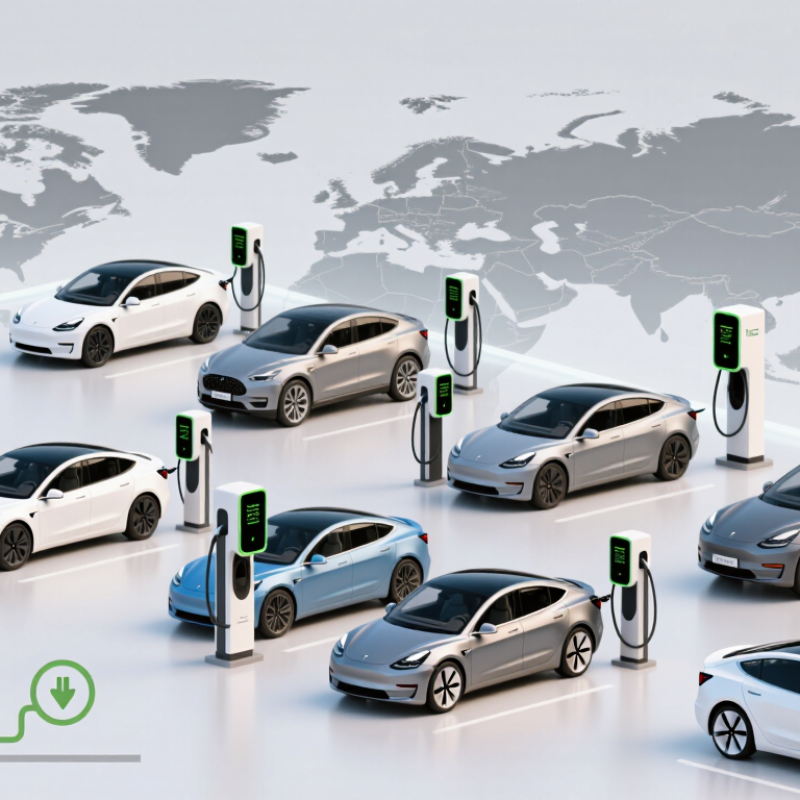
EVBox Charging Stations: Product Categories and Core Features
Charging stations generally fall into three practical groups: AC wall-mounted units, AC pedestal chargers, and DC fast chargers. Wall units suit homes, depots, and compact parking areas. Pedestals work well in shared lots where drivers need access from either side. DC equipment serves highway stops and busy public sites, but it usually demands greater electrical capacity and careful site planning.
The category names can blur. A pedestal may contain equipment similar to a wall unit, while its enclosure and cable reach change how drivers use it. Core features include output power, connector options, charging authorization, network connectivity, and load management. These details matter more than a polished housing. A fleet operator, for example, may need scheduled access and usage records; a small business may value simple payment and clear status lights. Check connector compatibility and grid requirements for each intended market. They vary. Outdoor installations also benefit from weather-resistant enclosures, accessible screens, and cables that reach parked vehicles without crossing walkways. Remote monitoring can help identify faults, though it does not replace local maintenance. One practical weakness is that feature lists rarely show how a charger behaves during a crowded evening. Ask for field performance data, and leave room for uncertainty.
Top 10 EVBox Charging Stations for Global Buyers - EVBox Charging Stations: Product Categories and Core Features
| No. | Charging Station Category | Charging Type | Typical Power Range | Common Applications | Core Features |
|---|---|---|---|---|---|
| 1 | Single-Port Residential AC Charger | AC, Level 2 / Mode 3 where supported | Typically 3.7–11 kW | Homes, private garages, overnight charging | Compact installation; charging schedule and current limits may be available depending on the model and electrical setup. |
| 2 | High-Power Residential AC Charger | AC, Level 2 / Mode 3 where supported | Typically 11–22 kW | Homes with compatible three-phase electrical service | Higher AC charging capacity; actual charging speed depends on the vehicle’s onboard charger and available site power. |
| 3 | Dual-Port Public AC Charger | AC, Level 2 / Mode 3 where supported | Commonly up to 22 kW per port, subject to site capacity | Retail locations, workplaces, parking facilities | Two charging points in one unit; power may be shared between vehicles depending on the system design. |
| 4 | Networked Workplace AC Charger | AC, Level 2 / Mode 3 where supported | Typically 7.4–22 kW per charging point | Offices, employee parking, commercial campuses | Network management can support user access, usage reporting, and load management when compatible software is deployed. |
| 5 | Wall-Mounted Public AC Charger | AC, Level 2 / Mode 3 where supported | Typically 3.7–22 kW | Compact car parks, hotels, small commercial sites | Wall-mounted format can reduce space requirements; enclosure rating and installation suitability vary by model and location. |
| 6 | Pedestal-Mounted Public AC Charger | AC, Level 2 / Mode 3 where supported | Typically 7.4–22 kW | Outdoor parking, streetside locations, public destinations | Freestanding installation; weather protection, accessibility, and mounting requirements should be checked for the site. |
| 7 | Entry-Level DC Fast Charger | DC fast charging | Approximately 20–50 kW | Urban sites, vehicle fleets, locations with moderate dwell times | Direct DC charging can reduce charging time versus AC charging; delivered power depends on the vehicle, battery state, and site supply. |
| 8 | Mid-Power DC Fast Charger | DC fast charging | Approximately 60–150 kW | Highway services, transit hubs, busy commercial sites | Designed for shorter stops than typical AC charging; power output may taper as the vehicle battery approaches a high state of charge. |
| 9 | High-Power DC Charging System | DC fast charging | Approximately 150–350 kW, where supported | Major travel corridors and high-throughput charging hubs | Supports high-power charging for compatible vehicles; requires suitable grid capacity and may need power management across outlets. |
| 10 | Scalable Multi-Charger Site System | AC, DC, or a combination | Varies by charger mix and available site power | Fleets, charging hubs, large parking operators | Centralized monitoring and dynamic load management can help coordinate multiple chargers; compatibility depends on the charging network and equipment. |
Power ranges are representative of common charging equipment categories, not specifications for a particular product. Available connectors, output, and features vary by region, model, vehicle, and electrical installation.