How to Choose Geothermal Energy Suppliers in 2026?

In 2026, choosing a Geothermal Energy supplier means looking beyond the headline price. A low quote can hide drilling assumptions, excluded pipework, or limited maintenance support. The right partner should explain what the site can realistically deliver, and what remains uncertain. That is not always a neat answer.

Geothermal researcher John W. Lund describes geothermal energy as “the energy stored in the form of heat beneath the surface of the solid earth.” That resource is local, but every project is different. A home heat-pump installation, a campus heating network, and a power plant need different expertise. Ask suppliers for comparable projects, site-specific resource data, clear system designs, and written performance assumptions. Look closely. Who handles drilling, commissioning, and repairs? How are costs affected by ground conditions, electricity prices, and equipment replacement? A credible supplier should answer plainly, not promise effortless savings.

This guide examines the practical checks behind a sound supplier decision: technical capability, transparent pricing, warranties, service capacity, and evidence from operating projects. It also considers how to compare proposals without treating forecasts as guarantees. Request references you can verify, and have an independent engineer review major assumptions when the project warrants it. No checklist removes uncertainty. Some figures may still change after site testing, and that deserves honest discussion. A dependable supplier makes those limits visible before contracts are signed, rather than burying them in fine print.
How to Choose Geothermal Energy Suppliers in 2026?

Understand the Role of Geothermal Energy Suppliers

Geothermal energy suppliers do more than deliver turbines or heat exchangers. They may assess subsurface data, coordinate drilling, design production wells, and support plant operations. Their responsibilities vary, so buyers should clarify who carries each task before comparing bids. A low equipment price means little if reservoir testing or well maintenance is excluded.

The International Energy Agency’s 2024 report, The Future of Geothermal Energy, estimates that geothermal could meet up to 15% of global electricity demand growth through 2050, with supportive technology and cost improvements. That potential depends on capable project teams, not equipment alone. Ask suppliers for evidence from comparable geology, expected well output, and plans for handling scale or corrosion. Request assumptions in writing. Small details matter.

IRENA’s Renewable Capacity Statistics 2024 recorded about 15 gigawatts of global geothermal power capacity at the end of 2023. The market is still specialized. A supplier’s experience in one region may not transfer neatly to another. I would check how its forecast changes under lower-than-expected reservoir temperatures, and who pays when drilling misses its target. That can feel uncomfortable. It is useful, too.

Define Your Project’s Energy and Site Requirements

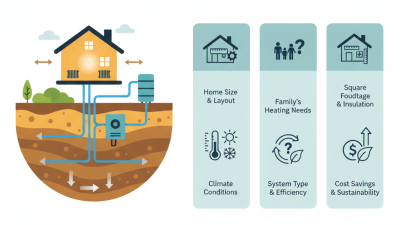
Before comparing geothermal energy suppliers, define what your project must deliver. Gather at least a year of utility bills, if available, and note monthly heating and cooling demand. Record peak loads too; a building may need much more heat on a cold morning than its annual average suggests. Include domestic hot water, operating hours, and planned expansions. Small details matter.

Describe the system’s required water temperatures and whether it must provide heating, cooling, or both. Lower heating temperatures can improve heat-pump performance, but existing radiators may need upgrades. A supplier should explain how your load assumptions affect equipment sizing, expected output, and backup needs—not just provide a headline efficiency figure. Measure twice.

The site matters just as much. Map usable land, buried utilities, access for drilling equipment, and distances from proposed boreholes to buildings. Share soil or geological records, groundwater observations, and any known contamination concerns. These clues help suppliers assess whether vertical boreholes, horizontal loops, or another ground-exchange design deserves investigation. An initial estimate may change after a site survey; that is normal, though it can complicate budgets. Ask what measurements and tests support the proposal, and what remains uncertain.

How to Choose Geothermal Energy Suppliers in 2026? — Define Your Project’s Energy and Site Requirements

Screen the site’s measured resource temperature against the project’s intended use before comparing suppliers.

These indicative temperature ranges are for early-stage screening, not guaranteed project thresholds. Actual suitability depends on resource conditions, technology, flow rate, and project economics.

Assess Supplier Technology, Experience, and Service Capabilities

How to Choose Geothermal Energy Suppliers in 2026?

Assess Supplier Technology, Experience, and Service Capabilities

A supplier’s technology should fit your site, not just its sales presentation. Ask how its equipment handles local temperatures, water chemistry, drilling conditions, and expected load changes. Request performance data from comparable projects, including seasonal output, downtime, and maintenance needs. Ask for evidence. The IEA’s 2024 report, The Future of Geothermal Energy, estimates that geothermal could provide up to 15% of global electricity-demand growth through 2050. That potential depends on continued technical progress, so claims about future performance deserve careful scrutiny.

Experience matters most when it matches your project’s geology and scale. Check references for operating sites, not only completed installations, and ask how the supplier managed a difficult repair or underperforming well. A polished case study may not reflect your ground conditions. This is easy to overlook. Compare service commitments in practical terms: remote monitoring, technician response times, spare-part availability, and scheduled maintenance. Ask who investigates an output drop at 2 a.m., and what happens if a specialist is unavailable. The IEA also says costs could fall to around $50 per megawatt-hour by 2035 in an accelerated-innovation scenario. Treat that as a scenario, not a guaranteed quote; request transparent assumptions on drilling, commissioning, and long-term service.

Verify Financial Stability, Certifications, and Regulatory Compliance

How to Choose Geothermal Energy Suppliers in 2026?

A supplier’s proposal is only as dependable as its finances, credentials, and permits. Check audited accounts, debt exposure, insurance limits, and cash flow for the full project timeline. Ask who funds well testing, equipment replacement, and delays. IRENA’s Renewable Capacity Statistics 2024 puts global geothermal power capacity at about 15 gigawatts at the end of 2023. That specialist market makes supplier experience and delivery capacity worth close scrutiny. A polished brochure is not proof.

Verify certificates directly with the issuing body. Check their scope, expiry date, and whether they cover the work being offered. Quality or environmental certifications can support due diligence, but they do not replace site-specific engineering evidence. Request references for comparable wells, commissioning records, and documented safety procedures.

Then confirm that the supplier holds current permits and approvals required by the project’s jurisdiction. Rules differ by location, and a missing authorization can stall a project. I would also ask for a written compliance matrix; it is easy to overlook one local requirement.

Tips: Request a bank or auditor reference, certificate numbers, permit copies, and a named compliance lead. Match each document to the contract scope. Keep a dated verification log. Small checks matter. A supplier may look solid on paper, yet still leave gaps; that deserves a second look.

Compare Proposals, Contracts, and Long-Term Support

How to Choose Geothermal Energy Suppliers in 2026?

A polished proposal is not enough. Compare each supplier’s assumptions about soil conditions, drilling depth, system size, and expected seasonal performance. Ask how those estimates were calculated, and request a clear breakdown of equipment, installation, commissioning, and exclusions. If one quote is much lower, check what it leaves out. That matters.

Tips: Put proposals side by side. Note projected energy use, warranty coverage, maintenance costs, and who handles each stage of installation. Ask for a sample monitoring report and the expected response time if the system stops working on a cold weekend. Small details count.

Read the contract for milestones, payment timing, performance guarantees, and what happens when site conditions differ from the survey. Confirm whether long-term support includes routine inspections, replacement parts, and access to trained technicians. Ask how service costs may change over time. A supplier may offer reassuring figures, but unclear terms can make them hard to evaluate. I would also speak with a recent customer about the handover and the first year of operation. Their experience may not match yours, but it can reveal gaps in the proposal. Good comparisons take time, and some assumptions will remain uncertain.

How to Choose Geothermal Energy Suppliers in 2026? - Compare Proposals, Contracts, and Long-Term Support

Use this evaluation matrix to compare proposals for building-scale ground-source heat pump projects. The suggested weights are a customizable decision framework, not an industry standard. Performance, permitting, and warranty requirements depend on the site, equipment, contract, and local regulations.

Evaluation Area Suggested Weight What to Compare Evidence to Request Contract and Long-Term Support Check
System design and building fit 15% Heating and cooling loads, proposed system capacity, zoning, backup heat, and how the design accounts for the building’s operating schedule. Load calculations, design assumptions, equipment schedules, and a clear description of how the design responds to the site’s climate and building characteristics. Specify the final design documents, approved substitutions, change-control process, and who is responsible for correcting design errors.
Performance and energy model 15% Projected electricity use and seasonal performance, including assumptions for ground-loop temperatures, indoor conditions, controls, and auxiliary equipment. Model inputs and outputs, calculation method, stated operating conditions, and a breakdown of estimated energy use. Compare proposals on consistent assumptions. Distinguish modeled estimates from guaranteed results. If performance is guaranteed, define the measurement period, meter boundaries, adjustment rules, and remedy for a shortfall.
Ground-loop and site assessment 15% Proposed loop type and layout, available land, geology, groundwater conditions, drilling access, and potential interaction with nearby structures or utilities. Site assessment, preliminary loop-field design, relevant subsurface information, drilling plan, and an explanation of any assumptions that still require field verification. Thermal response testing may be appropriate for some larger or higher-risk bore fields. Identify who bears the cost and schedule risk if actual subsurface conditions differ from assumptions, and how unforeseen conditions or redesigns are priced and approved.
Installed cost and lifecycle cost 15% Total installed price, included work, exclusions, expected electricity consumption, routine maintenance, and major component replacement assumptions. Itemized proposal separating equipment, drilling or excavation, loop installation, electrical work, controls, commissioning, permits, and allowances. Check payment milestones, escalation clauses, allowances, taxes, change orders, and any stated lifecycle-cost assumptions. Compare costs using the same analysis period and energy-price assumptions.
Scope, schedule, and permitting 10% Responsibility for design, permits, utility coordination, drilling, restoration, inspections, and coordination with other trades. Written scope matrix, project schedule, permit plan, named responsible roles, and a list of owner-provided items or excluded work. Define milestone dates, delay notifications, site-access requirements, acceptance criteria, and responsibility for permit or inspection corrections. Requirements vary by jurisdiction.
Warranty and risk allocation 10% Separate coverage for equipment, workmanship, ground-loop piping, controls, and any third-party components; review exclusions and claim procedures. Full warranty documents, start dates, transferability terms, labor and travel coverage, maintenance conditions, and the process for submitting a claim. Confirm that warranty durations and remedies are stated in writing. Check who pays for diagnosis, removal, replacement, refrigerant work, and system recommissioning.
Installation quality and commissioning 8% Installation procedures, pressure testing, flushing, air removal, flow balancing, control setup, and verification that the system operates as designed. Commissioning plan and completed records, test results, as-built drawings, equipment settings, and owner training materials. Make completed commissioning records and correction of identified deficiencies part of project acceptance and final payment requirements.
Maintenance and service capability 7% Availability of trained service personnel, diagnostic tools, spare-parts access, and support for the specific equipment and controls proposed. Service coverage area, escalation contacts, maintenance recommendations, sample service report, and details of any subcontracted support. Define service hours, response-time targets, fees, exclusions, and the process for urgent faults. Response targets should be written into the service agreement rather than assumed.
Supplier qualifications and references 5% Relevant project experience, required local licenses, safety practices, financial capacity, and familiarity with comparable building types and ground conditions. License and insurance documents, project references, safety information, and any applicable training or certification records. Verify credentials with the relevant issuing body. Confirm the contracting entity, subcontractor roles, insurance limits, dispute process, and continuity plan if a key subcontractor or service provider becomes unavailable.
Total suggested evaluation weight 100% Score each proposal against the same evidence requirements, then adjust the weights to reflect project priorities and risk tolerance.