
Why Choose an On Grid Solar System for Your Business?
Businesses are under growing pressure to manage energy costs and reduce operational emissions. An On Grid Solar System connects rooftop or ground-mounted panels directly to the electricity network. It can supply power during daylight hours, while the grid remains available when solar production falls. For a warehouse, that may mean panels working above loading bays as refrigeration and lighting run below.
The economics are worth examining. IRENA’s Renewable Power Generation Costs in 2023 reported that the global weighted-average levelized cost of electricity from newly commissioned utility-scale solar PV fell 12% from 2022. It was 90% lower than in 2010. These figures describe utility-scale projects, not every commercial installation, so they should not be treated as a guaranteed business saving. Still, they show how solar costs have changed.
Grid-connected systems can also make better use of daytime generation. Depending on local utility rules and the project design, surplus electricity may be exported or credited. The details matter. A business should compare its hourly consumption, roof condition, tariffs, and connection costs before investing. A sunny roof alone is not enough. IRENA’s figures cannot predict a particular site’s payback, and estimates may miss awkward realities, such as a roof needing repairs sooner than expected. Even so, for businesses with steady daytime demand, an On Grid Solar System can be a practical way to reduce purchased electricity and improve energy planning.
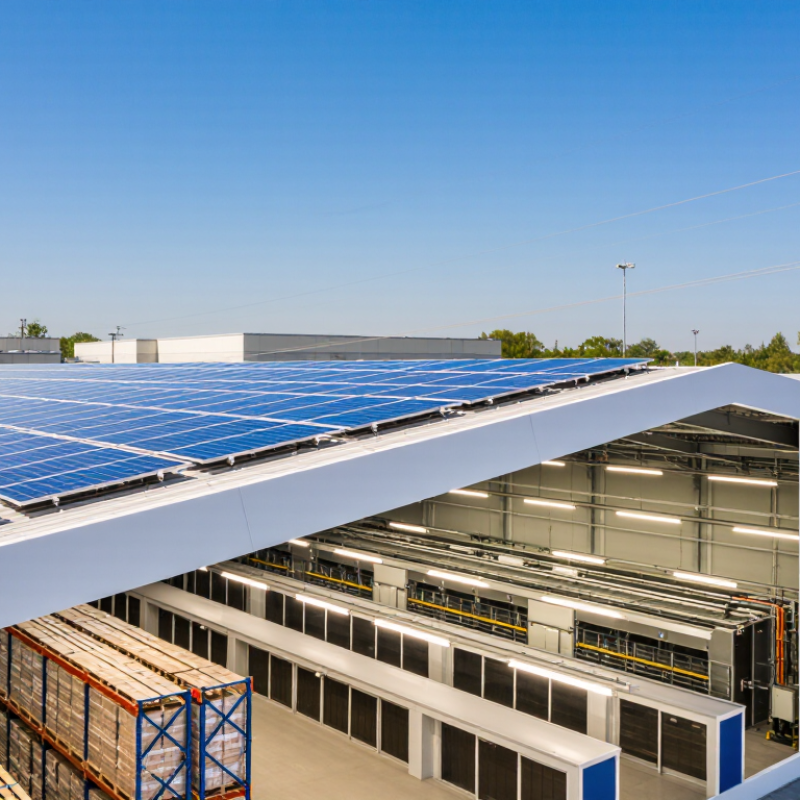
What an On-Grid Solar System Is
An on-grid solar system connects a business’s solar panels to the public electricity grid. Panels produce direct-current electricity, and an inverter converts it into alternating current for the building’s equipment. A meter records electricity flowing in both directions, where local arrangements allow. When the roof produces less power than the office, workshop, or cold room needs, the grid supplies the difference. When production exceeds demand, surplus electricity may be exported, depending on the utility’s rules and connection agreement. No battery required.
This connection can make solar practical for businesses that use power during daylight hours. Still, output changes with clouds, shade, roof direction, and season.
IRENA’s Renewable Capacity Statistics 2024 reports that global solar capacity reached 1,419 GW by the end of 2023, following 346 GW of additions that year.
That scale shows how quickly solar is growing, but it does not predict a particular site’s savings. The part businesses sometimes underestimate is the grid connection itself: an engineer should check the service capacity, inverter settings, protection equipment, and utility requirements before installation.
Grid power is useful backup, not a guarantee against outages; standard grid-tied inverters usually shut down during a blackout for safety. That detail matters. A site assessment may reveal that the roof, load profile, or connection needs more work than expected.
How a Grid-Connected Business Solar System Works
A grid-connected business solar system links rooftop panels, an inverter, the building’s electrical equipment, and the utility grid. Panels produce direct-current electricity when sunlight reaches their cells. The inverter converts it into alternating current and synchronizes it with the grid’s voltage and frequency. That makes the power usable by lights, refrigeration units, computers, and other building loads. A practical detail: the electricity is generally used on-site before any surplus flows to the grid. A bidirectional meter records imports and exports, subject to the utility’s metering arrangement.
Clouds move. Output changes.
When the panels produce less electricity than the business needs, the grid supplies the difference. When they produce more, excess power may be exported, but payment or credits depend on the applicable agreement. During a grid outage, most standard grid-tied inverters shut down to protect workers repairing power lines. Backup power requires compatible equipment, such as a properly designed battery system. Reviewing interval meter data can help match solar production to operating hours, though a year of past usage cannot predict every future shift or expansion. The roof’s usable area, shading, and electrical equipment also deserve a site-specific review.
Key Cost and Energy Benefits for Businesses
An on-grid solar system can reduce a business’s daytime electricity purchases by generating power where it is used. A workshop running saws at noon, or a grocery store cooling produce, may use much of its solar output immediately. That matters. The value depends on system size, roof shade, operating hours, and local electricity rates. A larger array is not automatically a better investment.
Tips: Compare recent electricity bills with interval usage data before sizing a system. Check roof condition and shading at different times of day. Ask for estimates that show assumptions, expected output, and maintenance costs.
Businesses may also earn credits for surplus electricity exported to the grid, where local programs allow it. The amount varies, so do not assume every exported kilowatt-hour offsets a purchased one. Request a payback estimate using your actual tariff and realistic production figures. Grid-connected solar usually shuts down during a grid outage unless designed with approved backup equipment. That detail is easy to miss. Solar can lower exposure to changing energy costs, but savings are not guaranteed; cloudy periods, equipment issues, and shifting business hours affect results. A forecast is still a forecast, and its assumptions deserve a close look.
How Grid Connection Supports Reliable Power Use
An on-grid solar system connects a business’s solar panels to the local electricity grid. When panels produce more than the building needs, surplus power may flow back to the grid, depending on the utility’s connection rules. When clouds roll in or demand rises after sunset, the building can draw electricity from the grid. Clouds still happen. This connection helps balance changing solar production with everyday needs, such as refrigeration, lighting, and computer equipment.
Tips: Review interval meter data before choosing a system size. Compare midday generation with your busiest operating hours, and ask a qualified installer how the system will interact with your existing electrical equipment. Keep monitoring production after installation; an unexpected drop may point to shading, soiling, or equipment faults.
Grid connection is useful, but it is not backup power by itself. For safety, many grid-tied inverters stop supplying power during an outage, unless the system includes compatible backup equipment. That detail can surprise owners. Discuss critical loads, outage plans, and local utility requirements during design and commissioning. Solar can reduce grid consumption when sunlight is available, but actual savings depend on weather, usage patterns, tariffs, and system performance. A modest system matched to real demand may be more practical than one sized around an optimistic forecast.
| Business Consideration | How Grid Connection Helps | Practical Limitation or Planning Point |
|---|---|---|
| Power when solar output is low | When the system is connected and the utility grid is operating, the business can draw electricity from the grid when solar generation is insufficient, such as at night or during low-sun periods. | Grid supply remains subject to utility outages, service conditions, and the applicable electricity tariff. |
| Use of on-site solar generation | Solar electricity can serve business loads as it is generated, reducing the amount of electricity that may need to be imported from the grid at that time. | Actual savings depend on the system size, the business’s load profile, local electricity prices, and how exported electricity is credited. |
| Surplus electricity | If generation exceeds on-site demand, some grid-connected systems can export the surplus to the network, subject to local rules and utility approval. | Export compensation, limits, and eligibility vary by location and electricity provider; exported power may be valued differently from imported power. |
| Continuity during a grid outage | A standard grid-tied inverter normally disconnects from the grid during an outage to prevent electricity from feeding into lines that utility workers may be servicing. | A typical grid-tied system alone does not provide backup power during an outage. Backup generally requires suitable equipment, such as a battery and an approved islanding or transfer arrangement. |
| Operating costs | Using on-site solar generation can reduce grid purchases when production and business demand coincide. | Results are site-specific. Evaluate installation costs, maintenance, financing, tariffs, taxes, and any demand or fixed charges before estimating payback. |
| System sizing and business demand | Production data and electricity bills can help align system capacity with the business’s daytime consumption and identify opportunities to use more solar power on site. | Consumption patterns change. Review seasonal loads, operating hours, planned expansion, roof conditions, and any utility export limits during design. |
| Interconnection and safety | Approved grid interconnection allows the system to operate in coordination with the local electricity network and applicable protection requirements. | Permits, inspections, metering arrangements, and technical standards depend on the local authority and utility and should be confirmed before installation. |
Factors to Consider Before Choosing an On-Grid System
Before selecting an on-grid solar system, examine how your business uses electricity throughout the day. A warehouse may run refrigeration overnight, while an office draws more power during working hours. Compare at least twelve months of bills with meter data, if available. Solar production often peaks when demand does not. That mismatch matters. Estimate how much electricity you can use directly, not just how many panels fit on the roof.
Check grid reliability and export arrangements before calculating savings. A standard grid-tied inverter usually shuts down during an outage, even on a sunny afternoon. This is a safety feature, not a fault. If interruptions affect sales or essential equipment, ask whether battery backup suits your needs and what it adds to the project cost. Payment for surplus electricity can vary by location and utility. Confirm current terms rather than relying on an old proposal.
Have the roof, wiring, and available space assessed in person. Nearby trees, rooftop units, and seasonal shadows can reduce output; a clear roof at noon is not the whole picture. Ask for estimates that state their assumptions, including energy prices, system losses, and maintenance. Consider roof repairs or business expansion before installation. Forecasts are still forecasts. I would question any calculation that promises fixed savings without showing its inputs. A little uncertainty is honest.